
Prepare. Practise. Participate.
Prepare. Practise. Participate.
Kabuliwallah- Summary, Themes, Characters, and Analysis | Rabindranath Tagore
About the author
Rabindranath Tagore (1861-1941) is an Indian poet, Short-story writer, playwright, novelist, social reformer, and painter. He composed national anthems of India and Bangladesh. He mainly wrote in Bengali. He won the Nobel Prize in 1913 for ‘Gitanjali’.
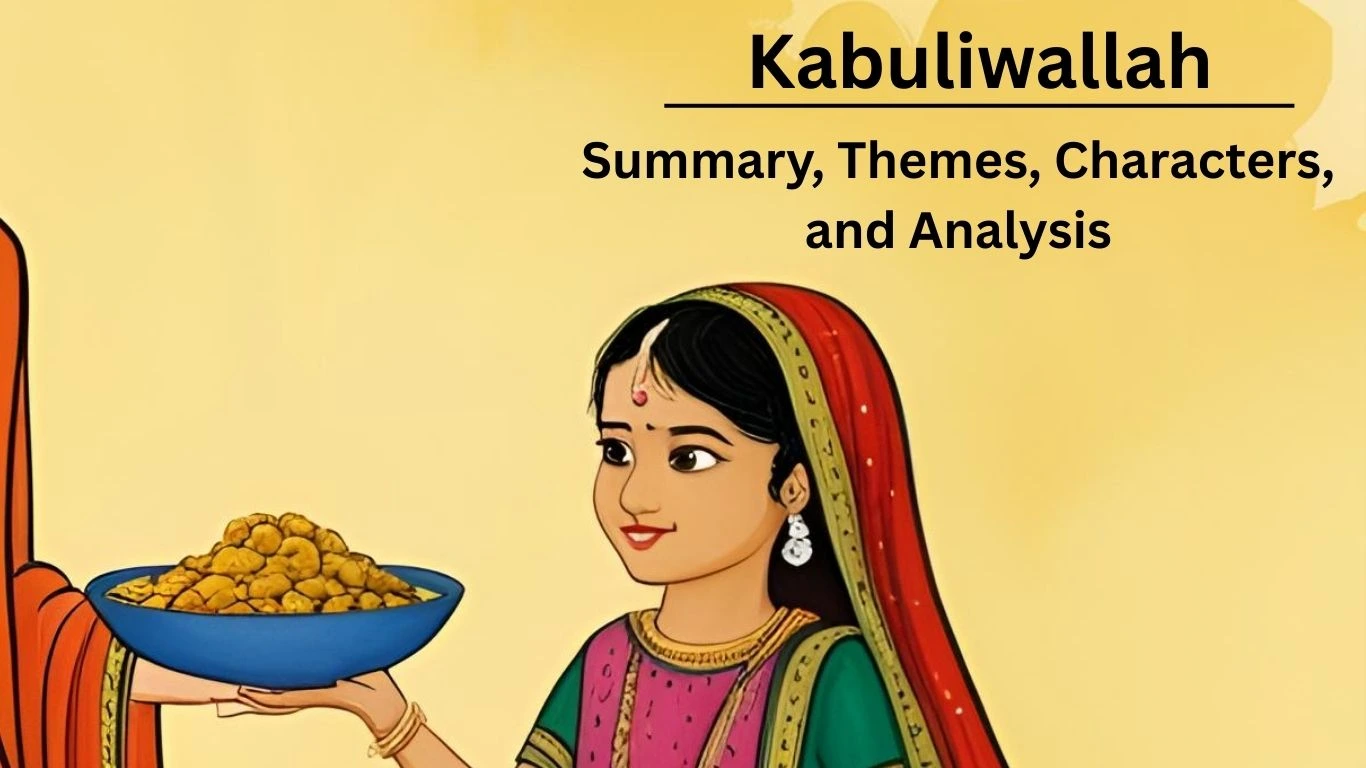 Kabuliwallah: A Tale of Love, Friendship, and Fatherhood
Kabuliwallah a tale of love beyond words. It is a fictional short story that revolves around an unusual friendship between Mini, a five-year-old girl, and Rahmat, a Kabuliwallah. The story concludes with an unspoken bond of fatherhood that Rahmat shares with Mini, reminding him of his own daughter, Parbati.
The entire story is narrated from a first-person perspective.
The main themes of the story include love, friendship, fatherhood, and humanity.
The story conveys a profound message that fatherhood is a universal emotion that transcends caste, creed, and profession.
Important Word Meanings
♦vexed-angry, ♦prattle- talk about unnecessary things, ♦stole- roam, ♦embark-to begin a journey, ♦darting off- moving swiftly, ♦murmured- whispered, ♦involuntarily- without will, ♦contrived- planned, ♦overlook-fail to notice, ♦castle- a large building, ♦escape- elude, ♦wore- put on, ♦terror- fear, ♦pedlar- hawker, ♦entered- stepped into, ♦precarious- dangerous, ♦impulse- sudden desire, ♦frontier- borderline, ♦tempted- entice to do something, ♦clung- hold on tightly to, ♦startled- surprised, ♦stuffed- filled, ♦demur- protest, ♦pounced- jumped, ♦impending- forthcoming, ♦disaster- trouble, ♦bribery-something that serves to induce, ♦quaint-unusual and strange, ♦gigantic- large, ♦ripple- small waves, ♦nasal-related to nose, ♦merriment-fun making, ♦witticism- humorous remark, ♦fascinating- attractive,
Summary of Kabuliwallah
When the narrator was writing the seventeenth chapter of his novel, his five-year-old daughter Mini stole in his room, and asked various questions without waiting for any answer. Later she was drumming on her knees, and a Kabuliwallah passed by the road. In the meantime, she called him, and he also came, but she did not come out. The narrator talked to the Kabuliwallah, made some small purchases, and brought Mini out to get her rid of his blind faith that there were two or three children like her in the Kabuliwallah’s bag. Mini came out and looked at the Kabuliwallah and his bag but did not talk to him on their first meeting. But later she became a friend of him as the Kabuliwallah had removed her fear by bribing her with nuts and raisins.
Every year Rahmat, the Kabuliwallah used to go to his country in January, so he collected his debts. One morning the narrator was correcting his proof streets, and heard an uproar, and came to know how Rahmat hit someone and got imprisoned.After several years Mini became quite mature, and made some new friends, and spent time with girls instead of her father. The narrator had arranged her marriage during the Puja Holidays in autumn.
Rahmat got released from jail this time and he reached Mini’s home on her wedding day. Then the narrator did not recognize him, but his smile made him Known to the narrator again. The narrator talked to Rahmat and instructed him to come another day. Rahmat was also going to leave but came back to give nuts and raisins to the narrator for Mini. The narrator went to pay him for his goods, but he pleaded not to pay money to him. Then, he brought out a small dirty piece of paper containing the impression of an ink-smeared hand of his daughter, and the narrator realized how he and Rahmat both were in the same plight with the same feelings towards their daughters. Therefore, he gifted a bank note to Rahmat so that he could meet his daughter in his country and wished the long-awaited meeting between Rahmat and his daughter would bless Mini with good fortune. Though his gift of a banknote to Rahmat made him curtail light and music from his daughter’s wedding, Mini’s wedding seemed to be brighter to the narrator of his thought that a long-lost father met with his daughter in a distant land.
Main Characters in Kabuliwallah
Rahmat – The Kabuliwallah
Rahmat, the Kabuliwallah is an honest, friendly, and brave vendor from Afganistan. He observes his daughter in Mini and brings nuts and raisins for her out of his love and affection, but not to make a profit. He observes hits someone falsely denies paying his debt, and gets imprisonment, but remembers Mini. So after getting released from jail he comes to meet Mini. When he brings out a small dirty piece of paper containing the impression of an ink-smeared hand of his daughter, he reveals how he loves his daughter and why he has so much fondness and affection for Mini. Overall, his relationship with Mini genuinely depicts the essence of fatherhood and friendliness.
Mini – The Talkative Girl
In the story ‘Kabuliwallah’, Mini appears twice and plays a pivotal role in the story. Once she appears as a five-year-old little girl who is talkative, active, and curious when she becomes a friend with Rahmat, the Kabuliwallah. Later, she appears as a grown-up girl who is mature and feels ashamed after hearing about her in-law’s house.
Mini’s Father – The Narrator
In the story ‘Kabuliwallah, Mini’s father is the narrator of the story ‘Kabuliwallah’, a kind-hearted person and a writer by profession. As a person, he is full of patience, imagination, and sensitivity. He listens to Mini when she has several questions to ask due to his patience. With the brush of imagination, he paints various pictures of the mountains, the glens, and the forests of his distant home. He talks to Rahman about Abdurrahman, the Russians, the English, and Frontier policy as a down-to-earth person. He realizes how he is in the same plight as the Rahmat as a father. In the end, he gifts a banknote to Rahmat by curtailing light and music from his daughter’s wedding and holds the greatest humanistic values through his sacrifice.
Mini’s Mother-A Timid Woman
Mini’s mother is so timid lady that after hearing any noise or seeing people coming towards the house, she concludes that they are either thieves, drunkards, snakes, tigers, malaria or cock roaches, Caterpillars, or an English sailor. After experiencing it for a long time she is not able to overcome her terror. She is very conscious of her daughter and she has so many doubts about the Kabuliwallah, so she wants the narrator to keep a watchful eye on Kabuliwallah.
Kabuliwallah Theme and Moral Lesson
In the story, “Kabuliwallah’ Rabindranath Tagore describes how Mini, a little girl becomes a friend of Rahamat, the Kabuliwallah who is a grownup fellow. This story discovers inherent fatherhood that the narrator realizes after being informed about Rahmat’s daughter, Parboti. This story portrays the selfless and pure love of Kabuliwallah to Mini when Rahmat bribes Mini nuts and raisins, and he meets her as he observes his daughter in her. This story paints the story of Kabuliwala’s separation and the narrator’s empathy for another father. The narrator curtails light and music from Mini’s wedding to give money to Kabuliwalah so that he can meet his daughter, and this way he also holds the greatest humanistic values by his sacrifice. So, this story depicts human emotions along with many themes such as fatherhood, friendship, sacrifice, separation, selfless love, and the relationship between India and Afghanistan.
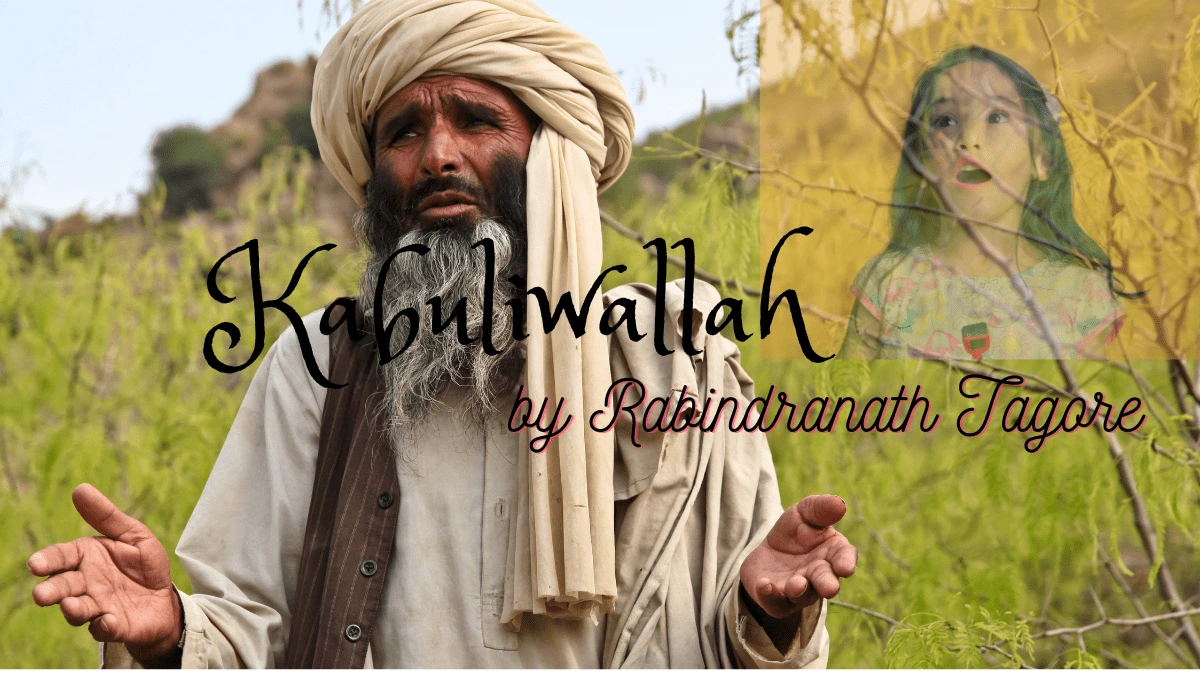
Kabuliwallah by Rabindranath Tagore – Study Guide with MCQs, Questions & Answers
Improve your understanding of Rabindranath Tagore’s heart-touching short story “Kabuliwallah” with this detailed study guide.
📚 Contents of the Study Guide:👉 Multiple Choice Questions (MCQs)
👉 Short Answer Type Questions👉 Long Answer Type Questions
👉 Textual Grammar from the Story👉 FAQs on Kabuliwallah
This guide is perfect for students preparing for exams and literature enthusiasts who want to delve deeper into the story’s characters, themes, and language.
Study notes
Multiple Choice Questions
1. Having been released from jail, Rahamat came to meet –
a) the vendor
b) Mini
c)his daughter
d)Ramdayal
2. The name of the doorkeeper is –
a)Pratap
b)Ramdayal
c)Rahmat
d)Bhola
3. How old was Mini?-
a)five years old
b)four years old
c)nine years old
d)eleven years old
4. On the first meeting Kabuliwallah offered Mini-
a)nuts and raisins
b)chocolate
c)flowers
d)shawl
5. Mini’s mother was –
a) a courageous lady
b) a timid lady
c) a quarrelsome lady
d) a narrow-minded lady
6. Kabuliwallah used to go to his country once a year in the month of –
a) January
b)March
c)December
d)February
7. Rahmat was arrested because of –
a) stealing a note
b) an act of murder
c)shouting on the road
d)taking a bribe from the jailer
8. In the story ‘Kabuliwallah’, the narrator could not recognize –
a)Rahmat, the Kabuliwallah
b)his daughter
c)his doorkeeper
d)his neighbour
9. In the seventeenth chapter of the narrator Pratap Singh caught –
a) a tiger
b)Kanchanlata
c)a snake
d)his cousin
10. Rahmat had a dirty piece of paper that bore the impression of –
a)a little hand
b)a beautiful home
c)nuts and raisins
d)a box
11. During her childhood days Mini’s patient listener was-
a) her mother
b)Rahmat, Kabuliwallah
c)Ramdayal
d)her father
12. Who became the great friends in the story ‘Kabuliwallah’?
a)Mini and Rahmat became great friends in the story ‘Kabuliwallah’
b)Mini and her mother became great friends in the story ‘Kabuliwallah’
c)Mini and her father became great friends in the story ‘Kabuliwallah’
d)Mini and her neighbour became the great friends in the story ‘Kabuliwallah’
✏️ Short Answer Type Questions
These short questions help reinforce core details and plot points of the story:
1. Why did Mini’s mother scold her?
Ans: Mini’s mother scolded her as she saw a coin in her hand, and Mini told her that she got the coin from Kabuliwallah.
2. Describe the blind belief Mini had about Kabuliwallah.
Ans: Mini had a blind belief that the Kabuliwallah carried two or three children like herself in his bag.
3. What event does the seventeenth chapter of Mini’s father narrate?
Ans: The seventeenth chapter of Mini’s Father narrates a story in which Pratap Sing, the hero had just caught Kanchanlata, the heroine in his arms, and was about to flee with her by the window of the third story.
4. What did Mini’s father and Kabuliwallah talk about on their first meeting?
Ans: Mini’s father and Kabuliwallah talked about Abdurrahman, the Russians, the English, and the Frontier policy at their first meeting.
5. What was Mini’s father writing when Mini called out to the Kabuliwallah?
Ans: Mini’s father was writing the seventeenth chapter of his novel when Mini called out to the Kabuliwallah.
6. When was the Kabuliwallah in the habit of returning to his country?
Ans: The Kabuliwallah was in the habit of returning to his country once a year in the middle of January.
7. How did Mini’s father visit foreign lands?
Ans: Mini’s father visited foreign lands through books and writings.
8. Who was Parbati?
Ans: Parbati was the daughter of Rahmat who was the Kabuliwallah.
9. When did Mini flee to her mother’s protection and why?
Ans: When Mini saw the Kabuliwallah for the first time, she fled to her mother’s protection because she had a blind belief that Kabuliwanah had two or three children like herself inside his bag.
10. What does Bhola say to Mini?
Ans: Bhola tells Mini that there is an elephant in the clouds, and they blow water out of his trunk. So, it rains.
11. How was the appearance of Kabuliwallah?
Ans: Kabuliwauah put on loose soiled clothing with a tall turban. He carried a bag on his back, and boxes of grapes in his hand.
12: What is the main theme of Kabuliwallah?Ans: The main theme is fatherhood, love, separation, and humanity. It shows how Rahmat, a Kabuliwallah, forms a deep emotional bond with Mini, reminding him of his daughter.
13. How had Kabuliwaulah overcome Mini’s first terror?
Ans: Kabuliwallah had overcome Mini’s first terror by a judicious bribery of nuts and almonds.
14. In which month Rahmat used to return his country?
Ans: Rahmat used to return to his country in the month of January.
15: Why was Rahmat imprisoned in Kabuliwallah?
Ans:Rahmat was imprisoned because he stabbed a man who refused to pay his debt for a Rampuri shawl.
🖊️ Long Answer Type Questions
1. How was Kabuliwallah’s appearance? Describe the first meeting between Mini and Kabuliwallah.
Ans: The Kabuliwallah wore a loose soiled dress with a tall turban. He had a bag on his back, and boxes of grapes in his hands.
Though Mini called Kabuliwallah, she was so afraid of him that she fled to her mother’s protection after seeing him. She believed there were two or three children like herself in his bag. So her father brought her out to get rid of her false fear. Coming out, she stood by her father’s chair and looked at the Kabuliwallah and his bag. Kabuliwallah offered her nuts and raisins, but she became closer to her father without being tempted. This way their first meeting was over.
2.”She is not able to overcome her terror”- Who is not able to overcome her terror? How is she?
Ans: Mini’s mother is not able to overcome her terror.
She is a timid lady who, upon hearing any noise or seeing people approach towards the house, she concludes that they are either thieves, drunkards, snakes, tigers, malaria or cock roaches, Caterpillars, or an English sailor. After experiencing it for a long time she is not able to overcome her terror. So she has so many doubts about the Kabuliwallah, and she wants the narrator to keep a watchful eye on Kabuliwallah.
3.”May the happiness of your meeting bring good fortune to my child”— In light of the above remark, discuss what made the narrator say so. Why were certain festivities of Mini’s wedding curtailed?
Ans: When the narrator came to know that Rahmat had a daughter like Mini, and how they had been separated from each other for eight years, he realized Rahmat’s pain as a father. So he took out a banknote to Rahmat so that he could go back to his daughter in his country. He also wished that the meeting between Rahmat and his daughter might bless Mini with good fortune.
As the narrator made a present and gave a banknote as a present to Rahmat, his funding for Mini’s wedding became less than he had decided. So, some certain festivities of Mini’s wedding were curtailed.
4.“I stopped them and enquired what it all meant”-Who was the speaker? What did he know after enquiring?
Ans:- In the story ‘Kabuliwallah’, the narrator is the speaker.
After enquiring he came to know that a certain neighbour owed something for a Rampuri Shawl from Rahmat, the Kabuliwallah, but later he had denied falsely having bought it. So Rahmat had quarrelled with him and hit him with a knife. As a result, the policemen arrested him.
📚 Textual Grammar from the Story
B. Do as directed:
1. At first, I did not recognize him. (Rewrite using relative clause)
Ans: At first, I did not recognize who he was.
2. Were children never kidnapped? (Change the voice)
Ans: Did someone never kidnap children?
3. To see Mini quiet is unnatural. (Rewrite using gerund)
Ans: Seeing Mini quiet is unnatural.
4. He wore the loose Hilled clothing of his people. (Replace the underlined word with a phrasal verb)
Ans: He put on the loose Hilled clothing of his people.
5. Why did you give her those? (Change the voice)
Ans: Why was she given those by you?
6. The man accepted the money. (Replace the underlined word with a phrasal verb)
Ans: The man took in the money.
7. Kabuliwallah had given it to Mini. (Change the voice)
Ans: It had been given to Mini by Kabuliwallah.
8. Where did you get that eight-anna-bit? (Change the voice)
Ans: Where was that eight-anna-bit got by you?
9. I stopped them and enquired what it all meant. (Replace the underlined word with a phrasal verb)
Ans: I stopped them and asked about what it all meant.
10. Seeing that the reply did not amuse the child, he held up his fettered hands. (Replace the underlined word with a phrasal verb)
Ans: Finding out that the reply did not amuse the child, he held up his fettered hands.
11. He was not remembered. (Replace the underlined word with a phrasal verb)
Ans: He was not thought of.
12. Having made this present, I had to curtail some of the festivities. (Split into two simple sentences)
Ans: I made this present. I had to curtail some of the festivities.
13. Will you give them to her? (Change the voice)
Ans: Will she be given them by you?
or,
Will they be given to her by you?
14.It was Rahamat the Kabuliwallah. At first, I did not recognize him. (Join using relative clause)
Ans: It was Rahamat the Kabuliwallah whom I did not recognize at first.
15. He had come year after year to Calcutta. (Rewrite using past simple tense)
Ans: He came year after year to Calcutta.
16. Rahamat was sentenced to some years of imprisonment. (Change the voice)
Ans: Somebody sentenced Rahamat to some years of imprisonment.
17. She is not able to overcome her terror. (Replace the underlined word with a phrasal verb)
Ans: She is not able to get over her terror.
18. Hurrying out, I stopped them and enquired what it all meant. (Replace the underlined word with a phrasal verb)
Ans: Hurrying out, I looked into them and enquired what it all meant.
19. I took out a bank note and gave it to him. (Rewrite using a gerund)
Ans: Taking out a bank note I gave it to him.
20. I sent for Mini immediately. She was in the inner apartment. (Join using a relative clause)
Ans: Immediately I sent for Mini who was in the inner apartment.
21. He looked wistfully at me for a moment. (Change the voice)
Ans: I was looked at by him wistfully for a moment.
22. New companions filled her life. (Change the voice)
Ans: Her life was filled with new companions.
23. My five-year-old daughter Mini cannot live without Chattering. (Rewrite the sentence using a relative clause)
Ans: Mini is my five-year-old daughter who cannot live without chattering.
24.”The Kabuliwallah gave it to me”, said Mini Cheerfully. (Change the mode of narration)
Ans: Mini said cheerfully that the Kabuliwallah had given it to her.
25. The wail of the tune, Bhairavi, seemed to intensify my pain at the approaching separation. (change into a complex sentence)
Ans: The wail of the tune which was Bhairavi, seemed to intensify my pain at the approaching separation.
26. In the middle of January, Rahmat, the Kabuliwallah, was in the habit of returning to his country. (use Relative clause)
Ans: In the middle of January, Rahmat who was the Kabuliwallah, was in the habit of returning to his country.
Exercise
A. Answer the following:
a)Name three of Rabindranath Tagore’s friends who were notable as 20th-century figures.
b)How did Kabuliwallah dress up when Mini’s father first saw him?
c)What did Mini’s father see one morning when he heard an uproar in the street and looked out?
d)What present did Mini’s father give to Rahmat at the end of the story? How did the present affect the festivities of Mini’s marriage?
e) What did Rahamat take out from his pocket to show Mini’s father?
f)Why was Rahamat arrested?
g)How was the relationship between Rahamat and Mini?
h)”May the happiness of your meeting bring good fortune to my child”-Who said to whom? What made the speaker say so?
g)Why were certain festivities of Mini’s wedding curtailed?
i)Describe the significance of the ending of the story ‘Kabuliwallah’.
Related posts-Kabuliwallah- Summary, Themes, Characters, and Analysis
❓Frequently Asked Questions (FAQs) on Kabuliwallah
Q: 1. What is the moral of Kabuliwallah?
A: The story teaches the values of love, compassion, and human connection beyond societal and cultural boundaries. It highlights the deep emotions of fatherhood and the pain of separation, showing that love transcends differences in status, nationality, and time.
Q: 2. What is the significance of Mini’s Wedding?
A: Mini’s wedding symbolizes the passage of time and change. For Rahmat, it is a heartbreaking reminder that his own daughter may have grown up without him during his years in prison. It also makes Mini’s father realize the depth of Rahmat’s emotions, leading him to show kindness by helping him return to his homeland.
Q:3. In which month Rahmat used to return his country?
A: Rahmat used to return to his country in the month of January.
Q:4. Who was Ramdayal?
A: Ramdayal was the doorkeeper in Mini’s house.
📌 Read More About Rabindranath Tagore’s Works
Explore Tagore’s other literary contributions:
Gitanjali (Song Offeings):63-line by line explaination
Gitanjali (Song Offeings):63-substance
Gitanjali (Song Offeings):63-Question & Answer
Disclaimer: This content is created solely for educational and informational purposes. It draws upon publicly available educational materials, literary texts, and the author’s own interpretation. All summaries, analyses, and explanations are original and intended to support learning. No copyright infringement is intended.